



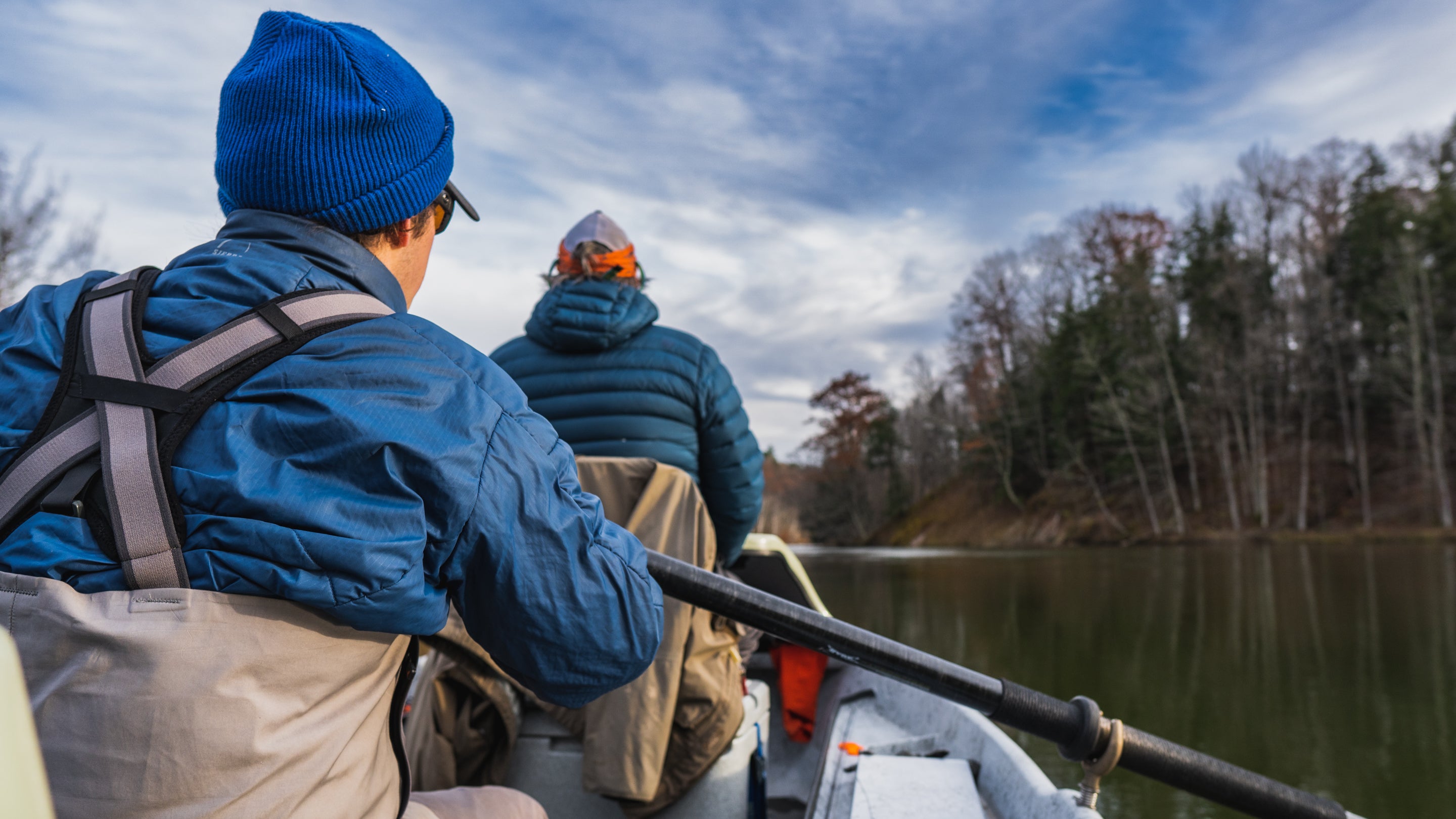


This spring, anglers watched Northern Michigan rivers rise to historic levels. Roads washed out, bridges sustained major damage, and the rivers we know so well changed drastically. Many anglers were left wondering what this meant for our rivers and fisheries — and whether things will ever be the same. In this episode of Spooled, Brian and Matt discuss the 2026 flooding and its ramifications for our fisheries.
WHERE TO LISTEN


High Water, Flooding & Trout Survival
This spring, Northern Michigan rivers reminded us who’s really in charge.
Weeks of heavy rain and runoff pushed rivers like the Boardman and Manistee well beyond their normal spring flows. Roads washed out. Bridges took damage. Familiar gravel bars disappeared. Some sections of river look completely different than they did just a month ago.
For anglers, it’s hard not to wonder what all of this means for the trout.
After every major flood event, the same questions surface:
Did the fish survive?
Will the river recover?
Will it ever fish the same again?
The truth is, trout are far more resilient than most people think.
Trout Were Built for This
When rivers rise, trout don’t just get swept downstream helplessly. They move. They slide behind wood, tuck against soft banks, settle into slower seams, and wait things out anywhere they can escape the heaviest current. Research on brown trout movement during flood conditions has shown trout actively seek refuge habitat during high water events rather than simply being displaced downstream. (academic.oup.com)
That tracks with what many of us have seen firsthand on rivers like the Boardman and Manistee over the years. Even after major rain events, trout usually aren’t gone — they’re just using different water.
The bigger change is often the river itself.
Rivers Change Faster Than We Expect
Anyone who has spent years fishing the same stretch of river develops a mental map of it. Certain log jams, undercut banks, gravel runs, or cedar-lined bends start to feel permanent.
Then one flood comes through and rearranges everything overnight.
That’s exactly what many anglers are seeing right now across Northern Michigan. New channels have opened up. Gravel has shifted. Trees moved. Deep holes filled in while entirely new ones formed downstream.
On parts of the Boardman especially, the river feels unfamiliar in places. Some accesses and crossings may take years to fully recover. The Manistee saw similar changes in sections that already handle massive spring flows every year.
As frustrating as that can feel, changing rivers are not necessarily unhealthy rivers.
Studies following major flooding events in trout systems have shown fish populations often recover surprisingly well, even when habitat changes dramatically. (usgs.gov)
The river may not look the same, but that doesn’t mean the trout disappeared with it.
Timing Matters
Flooding can absolutely impact trout populations under the wrong conditions, especially during spawning and early development.
Large spring floods can disturb redds, move sediment into spawning habitat, and reduce survival rates for young fish before they fully emerge from the gravel. Research on salmonids has shown that severe spring flooding can negatively affect juvenile survival during these vulnerable stages. (researchgate.net)
But trout rivers are also dynamic systems. High water is part of their natural rhythm, especially in places like Northern Michigan where spring runoff has shaped these rivers long before roads, dams, or boat launches existed.
In many cases, moderate flooding actually improves habitat over time by reconnecting side channels, moving gravel, and creating new cover.
Learning the River Again
One thing feels certain after this spring: many anglers are going to have to learn portions of these rivers all over again.
Favorite spots may be gone. New water will emerge. Some stretches may fish better in a few years because of the changes happening right now.
That’s part of fishing rivers like the Boardman and Manistee. They’re living systems. They evolve constantly, even if we usually only notice it during years like this one.
The floods of 2026 were significant, and there’s no question some stretches of river and infrastructure took real damage. But if history tells us anything, it’s that trout are remarkably adaptable.
The river may look different this season. But there will still be trout living in it.

2026 Flooding Reports
Use this section to explain a set of product features, to link to a series of pages, or to answer common questions about your products. Add images for emphasis.

USGS study on flooding and trout populations
This USGS study explores the effects of extreme floods on trout populations and fish communities in a Catskill Mountain river

Brown trout during high water events
Use this section to explain a set of product features, to link to a series of pages, or to answer common questions about your products. Add images for emphasis.
Past episodes
View all

